
Live on Confetti Digital
Read moreOur Shows

Live on Confetti Digital
Read more


Teachers strike over random drugs test call
By Angela Harrison Education correspondent, BBC News
Test tubes Some companies and organisations routinely test staff for drugs
Teachers at an independent special school in Derbyshire are on strike after one of them was asked to take a random drugs test.
Eleven teachers at the Alderwasley Hall School, which is a residential centre as well as a school, are taking action this week.
Their union, the NASUWT, says one teacher was suspended after refusing to take a test, although this was lifted late on Wednesday.
The school is not commenting.
The union says other members of staff have been threatened with dismissal if they refuse to take a test.
Chris Keates, the general secretary of the NASUWT, said: “It is simply unacceptable for an employer to impose a policy of drug and alcohol testing which we believe is unjustified and unlawful and attacks the professionalism of the teachers at the school.
“There is no basis whatsoever for believing that dedicated and committed teachers at Alderwasley Hall School are misusing drugs or alcohol.
“This is simply a case of an employer abusing its position and flagrantly disregarding the rights of its employees.”
Employees in certain roles, including those involving safety or care of other people, are sometimes asked to take part in random drugs tests and some US schools run drugs tests on students.
Government guidelines say employers have to have consent from staff they want to test for drugs and that tests should be random.
Human rights legislation
In this case, the union says the company that runs the school, Senad, brought in a policy of random drugs testing of staff in January 2009 and later that year asked staff to sign new contracts that had a clause agreeing to random urine and blood tests.
The union says its members refused to sign the contract but there were no requests for drugs tests until last week.
They have been on strike since Tuesday this week, but the school has remained open, because teachers make up a small proportion of the staff there.
The union says the school’s policy on drugs tests is unlawful under human rights legislation because it allegedly breaches a person’s right to respect for their private life.
There are exceptions in law where public health and safety is at stake, but the union argues these do not apply in this case.
The school and Senad group have been contacted by the BBC but did not wish to comment.
In state schools in England, teachers have the power to search pupils for drugs if they give consent, government guidance says.
The guidelines add: “The Association of Chief Police Officers (Acpo) recommends that drug dogs and drug testing should not be used for searches where there is no evidence for the presence of drugs on school premises.
“However schools may choose to make use of drug dogs or drug testing strategies if they wish. It is advisable that the school consults with the local police.”
via BBC News – Teachers strike over random drugs test call
.
Mandatory drug testing ‘bonkers’ – Professor David Nutt
30 January 2013
Professor David Nutt has said the suggestion that people should face mandatory drug testing by their employers is “bonkers”.
The former advisor to the UK government said the idea – suggested by Metropolitan Police Commissioner Sir Bernard Hogan-Howe – would lead to “an enormous amount of errors” and “no net benefit”.
He said a “rational approach” to drugs, as seen in the Netherlands, Portugal and Colombia – where the government has announced plans to legalise personal use of drugs like ecstasy – would have more impact.
via BBC News – Mandatory drug testing ‘bonkers’ – Professor David Nutt.
Mandatory drug testing ‘bonkers’ – Professor David Nutt
30 January 2013
Professor David Nutt has said the suggestion that people should face mandatory drug testing by their employers is “bonkers”.
The former advisor to the UK government said the idea – suggested by Metropolitan Police Commissioner Sir Bernard Hogan-Howe – would lead to “an enormous amount of errors” and “no net benefit”.
He said a “rational approach” to drugs, as seen in the Netherlands, Portugal and Colombia – where the government has announced plans to legalise personal use of drugs like ecstasy – would have more impact.
via BBC News – Mandatory drug testing ‘bonkers’ – Professor David Nutt.
New drug bill ‘to decriminalise ecstasy’ in Colombia
The BBC’s David Cuen explains some of the issues surrounding drugs law in Latin America
Colombia’s Justice Minister, Ruth Stella Correa, has said a new drugs bill would decriminalise personal use of synthetic drugs, such as ecstasy.
The proposal would replace current laws, which ban cocaine and marijuana, although people are not prosecuted for possessing small amounts.
Colombia’s legislation is being re-assessed in an attempt to tackle drug use, trafficking and related issues.
Critics say the inclusion of synthetic drugs will only confuse the debate.
The justice minister spoke after a meeting with the commission set up to assess the government’s drug policies over the last 10 years.
Former President Cesar Gaviria is part of the group along a number of experts and academics expected to produce a document with recommendations within eight months.
Ruth Stella Correa pointed out that the Constitutional Court had already spoken against the criminalisation of people carrying small amounts of marijuana and cocaine.
“The new statute to be presented to the Congress during this mandate intends to make this authorisation concrete, but broadening it to include synthetic drugs into what is defined as the personal dose”, the minister told Colombia’s National Radio.
‘End of business’
A spokesman for the country’s Green Party has expressed support for the government’s plan.
“The problem in Colombia is a problem with soft drugs: marijuana and cocaine. The curse of drug trafficking depends fundamentally on cocaine and the decriminalisation in the world will end this business,” senator Roy Barreras told Caracol Radio station.
However, critics say that decriminalising the personal use of synthetic drugs will only make the debate more difficult.
Experts agree that synthetic drugs include ecstasy and methamphetamines, but some argue the definition could be applied to heroin.
The justice minister’s announcement reopened the discussion about drug use in Colombia.
Until recently, the country adopted a more repressive approach to drug use, with laws that penalised the possession and consumption of drugs.
However, a string of decisions by the High Court in the last two years is said to be reversing the trend.
The new drug bill is expected to be put forward to the Colombian Congress in the next few months.
via BBC News – New drug bill ‘to decriminalise ecstasy’ in Colombia.
New drug bill ‘to decriminalise ecstasy’ in Colombia
The BBC’s David Cuen explains some of the issues surrounding drugs law in Latin America
Colombia’s Justice Minister, Ruth Stella Correa, has said a new drugs bill would decriminalise personal use of synthetic drugs, such as ecstasy.
The proposal would replace current laws, which ban cocaine and marijuana, although people are not prosecuted for possessing small amounts.
Colombia’s legislation is being re-assessed in an attempt to tackle drug use, trafficking and related issues.
Critics say the inclusion of synthetic drugs will only confuse the debate.
The justice minister spoke after a meeting with the commission set up to assess the government’s drug policies over the last 10 years.
Former President Cesar Gaviria is part of the group along a number of experts and academics expected to produce a document with recommendations within eight months.
Ruth Stella Correa pointed out that the Constitutional Court had already spoken against the criminalisation of people carrying small amounts of marijuana and cocaine.
“The new statute to be presented to the Congress during this mandate intends to make this authorisation concrete, but broadening it to include synthetic drugs into what is defined as the personal dose”, the minister told Colombia’s National Radio.
‘End of business’
A spokesman for the country’s Green Party has expressed support for the government’s plan.
“The problem in Colombia is a problem with soft drugs: marijuana and cocaine. The curse of drug trafficking depends fundamentally on cocaine and the decriminalisation in the world will end this business,” senator Roy Barreras told Caracol Radio station.
However, critics say that decriminalising the personal use of synthetic drugs will only make the debate more difficult.
Experts agree that synthetic drugs include ecstasy and methamphetamines, but some argue the definition could be applied to heroin.
The justice minister’s announcement reopened the discussion about drug use in Colombia.
Until recently, the country adopted a more repressive approach to drug use, with laws that penalised the possession and consumption of drugs.
However, a string of decisions by the High Court in the last two years is said to be reversing the trend.
The new drug bill is expected to be put forward to the Colombian Congress in the next few months.
via BBC News – New drug bill ‘to decriminalise ecstasy’ in Colombia.
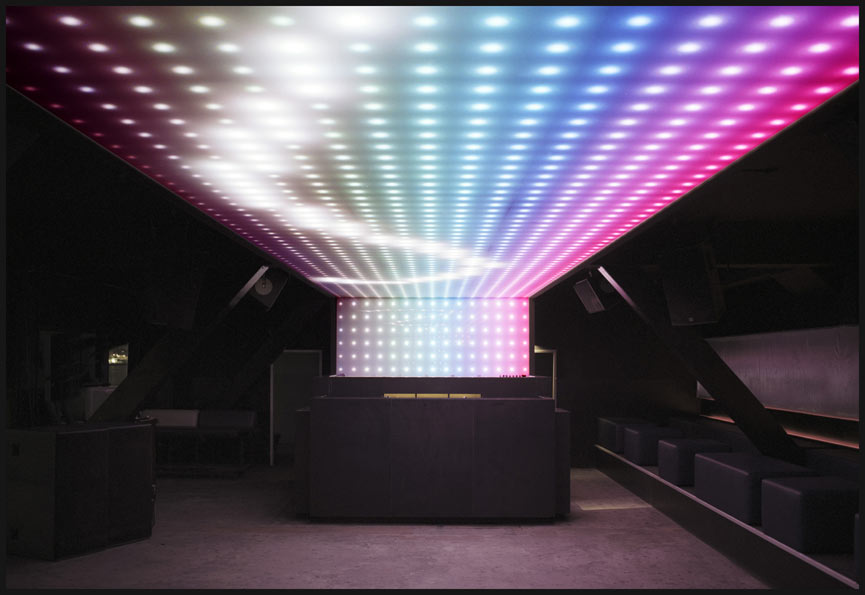
GEMA REPORTEDLY CRACK DOWN ON DJS AS WELL AS CLUBS, ADDING NEW “LAPTOP SURCHARGE” TO SETS
Earlier this year, GEMA, the body charged with collecting royalties in Germany, announced a controversial overhaul of its fee structure.Having historically charged venues a flat rate, GEMA are introducing a system based on the size of the venue and a percentage of ticket prices. GEMA’s original proposal was for events that last more than five hours to weather a 50% surcharge, increased by an extra charge if the party tips over the eight hour mark, though recent negotiations have led to this charge being reduced. The new system is scheduled to come in to force in April 2013. The clubbing community both German and worldwide balked at the changes, with high-profile clubs like Berghain and Watergate [above] claiming that they would be forced to close (Berghain later announced that it would, in fact, be staying open).On June 30, over 2000 German venues cut their music for five minutes by means of protest, and an online petition opposed to the move gathered over 60,000 signatures. Despite this, the Deutsches Bundestag – Germany’s Parliament – decided at the start of November that it would not intervene, suggesting that supporters of the petition “form a compromise with GEMA directly”. When FACT spoke to Nick Hoppner, manager label of Ostgut-Ton (the Berghain’s in-house label) earlier this year, he expressed the view that the clubbing community needed to change GEMA from the inside.It now appears that GEMA are attempting to knuckle down even harder on club performances. So far this has only – to our knowledge – been reported on German language websites, but at the heart of these newly proposed set of changes is a tax (or “laptop surcharge”) on DJs playing music from laptops, to the tune of 30% for every music file under five minutes with an increase of 20% for each additional minute. What we’re unsure about is whether this only refers to files that are played, or all music on the offending laptop – we’d presume the former, but the post on Tanith implies the latter (“e.g. 10,000 mp3s on the DJ laptop would [require] 1,300 Euros”).The proposal has reportedly been negotiated with the German Discotheques and Nightclubs unions (DDU and DDO). Dean Driscoll, of German-based promotions company Tailored Communiation, explained on Twitter this morning that these unions are “sub-branches of GEMA populated solely by GEMA members.” We subsequently spoke to Driscoll over email, who explained that although his German is basic, he ran through theTanith article with German industry colleagues, who confirmed that this was the case. This article on the DDU website also refers to the “laptop surcharge”, though it also explains that DJs who are members of the DDU – a minority, if the union is filled with GEMA members – will be exempt from this charge.German-based musicians have been reacting to the news this morning, though we’re yet to see it confirmed by GEMA or the DDU themselves (Tanith appear to have a copy of the proposal – above, right).

5 Jul 2012 published by www.factmag.com
Shredded Long Island police records that landed on spectators at Macy’s Thanksgiving Day parade were brought by a department employee who tossed the confidential confetti with his family, a New York TV station reports.
Among the easily identifiable records from the Nassau County Police Department were what appears to be details of Mitt Romney’s motorcade route to and from the final presidential debate at Hofstra University.
Confetti collected by spectators near 65th Street and Central Park West also contained arrest records, incident reports and personal information and that identified undercover officers, WPIX-TV says.
“There are phone numbers, addresses, more Social Security numbers, license plate numbers,” said Ethan Finkelstein, 18, of Manhattan, who gathered up some of the confetti with friends. “And then we find all these incident reports from police.”
He gave the confetti to police, who continue to investigate.
Sources told WPIX, which broke the story Friday, that the files came from the Nassau County Police Academy and that protection has been offered to all officers whose identifies were revealed. Police would not identify the employee who brought the confetti to the parade.
“The Nassau County Police Department is very concerned about this situation,” Inspector Kenneth Lack said. “We will be conducting an investigation into this matter as well as reviewing our procedures for the disposing of sensitive documents.”
Instead of strip-cutting shredders, Nassau police may buy cross-cutting machines that would dice files into small pieces.
For the record, Macy’s is not guilty. The parade sponsor said it uses “commercially manufactured, multicolor confetti, not shredded paper.”
via Confetti from police files tossed at Macy’s parade | Daily Record | dailyrecord.com.

Iconic label: Confetti Records
Read more